
“Clarity affords focus” -Unknown
Welcome back to our new blog series this month that covers all aspects of diamond education. This month we are working our way through the 4 C’s of diamonds to help you better understand just what goes into the perfect diamond.
Last week we discussed everything you need to know about a diamond’s cut. This week we are continuing our series by going over just what the clarity of a diamond is, and why that matters.
Welcome back to our new blog series this month that covers all aspects of diamond education. This month we are working our way through the 4 C’s of diamonds to help you better understand just what goes into the perfect diamond.
Last week we discussed everything you need to know about a diamond’s cut. This week we are continuing our series by going over just what the clarity of a diamond is, and why that matters.
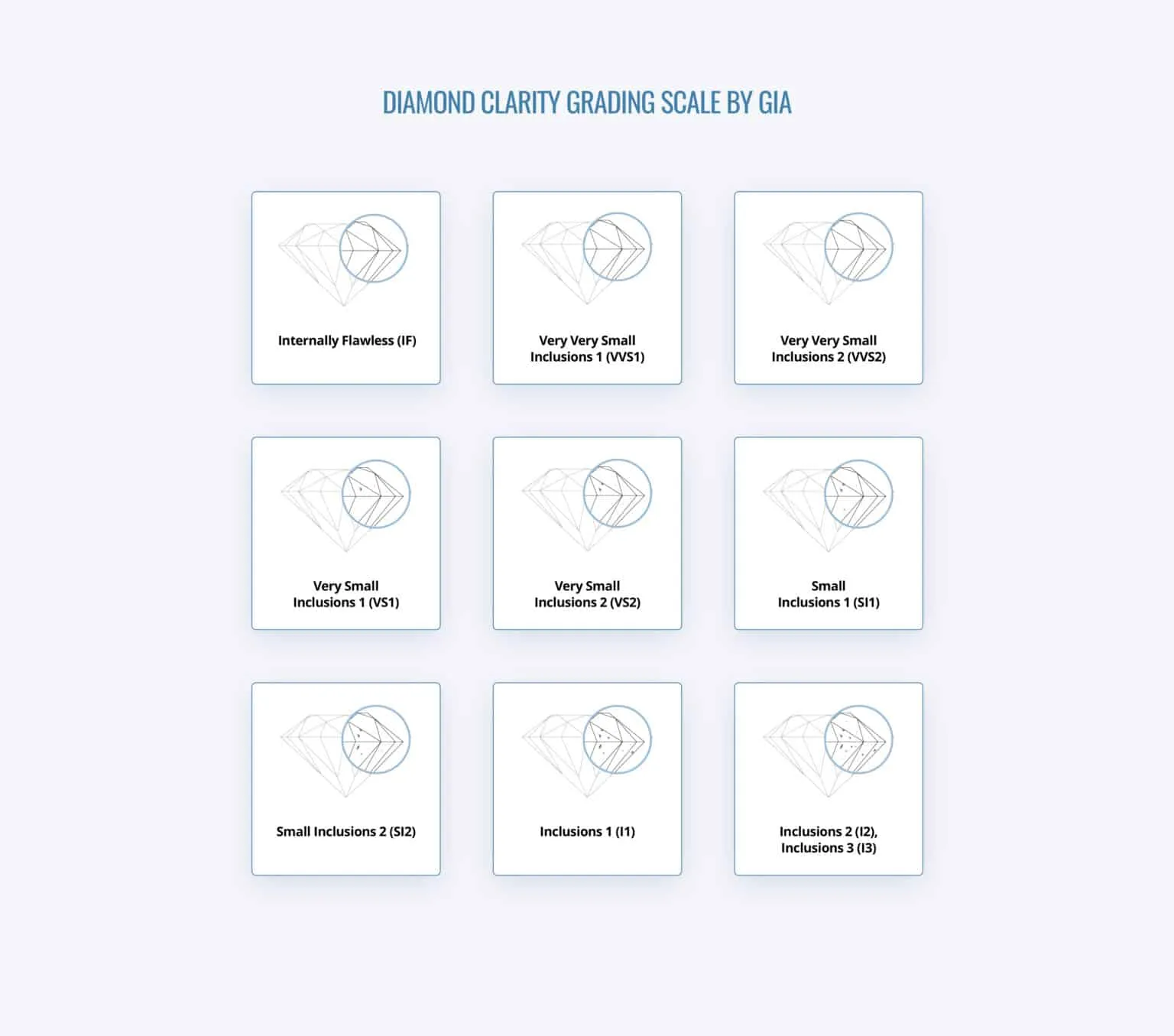
We should begin by explaining just what exactly clarity is. Well as we know a diamond is a gem that begins life as a rock under the earth’s surface that goes through a natural process to transform it. As that process is going certain aspects such as pressure & time can have an impact on the final product.
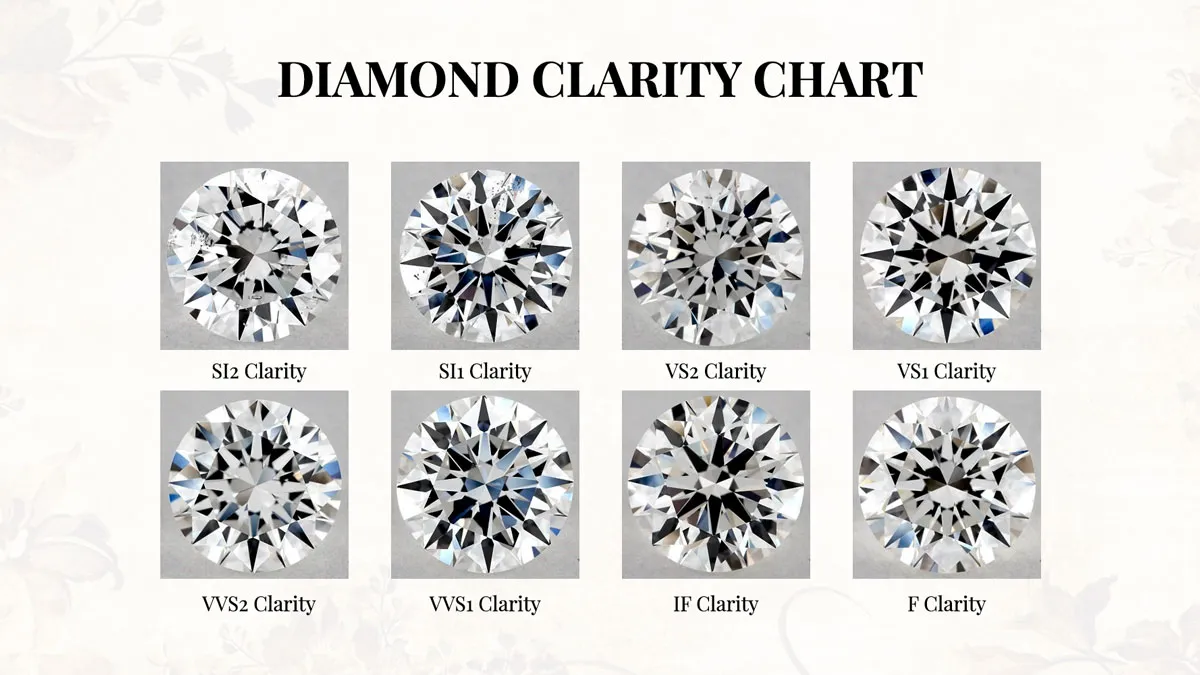
When the final diamond is mined, they don’t all look the same. Diamonds can have blemishes and inclusions in them that can affect how “clean” they appear to the naked eye, as well as under a microscope.
These blemishes are taken into account, and diamonds are graded based on how “clean” or “perfect” they appear to be. The cleaner the diamond the more value it has. However, it is worth noting that the vast majority of diamonds mined from the earth do not fall into the “perfect” category of clarity. Only the rarest of diamonds come out perfect.
When the final diamond is mined, they don’t all look the same. Diamonds can have blemishes and inclusions in them that can affect how “clean” they appear to the naked eye, as well as under a microscope.
These blemishes are taken into account, and diamonds are graded based on how “clean” or “perfect” they appear to be. The cleaner the diamond the more value it has. However, it is worth noting that the vast majority of diamonds mined from the earth do not fall into the “perfect” category of clarity. Only the rarest of diamonds come out perfect.
There are 5 different aspects that are examined in determining a diamonds clarity. They include: Size, Nature, Number, Location, and Relief. While that may sound confusing let us go through them one by one.
SIZE:
This looks as the specific sizes of the inclusions in the diamonds because the larger the inclusions the less valuable it is.
NATURE:
This speaks to the type of blemish or inclusion on the actual diamond. If there is an issue on the surface of the diamond it is referred to as a blemish, but if an issue is deeper within the diamond itself it is referred to as an inclusion. This also goes towards any of characteristics of the diamond that can be observed.
NUMBER:
This simply refers to the number of blemishes or inclusions. The more imperfections the lower the value
LOCATION:
This goes hand in hand with the nature aspect of grading. While nature is looking at how deep the imperfection is within the diamond, the location is looking for the specific are of an imperfection. Imperfections closer to the center of a diamond are seen as less valuable then diamonds with imperfections that may be off to one side or the other.
Additionally, while inclusions found in the center of the diamond are easy to identify, those found towards the diamonds girdle or pavilions may be harder to spot and identify.
RELIEF:
This aspect simply refers to how noticeable the inclusion is compared to the diamond as a whole. When reliefs are higher the diamond may appear darker, and that can affect the grade it receives.
SIZE:
This looks as the specific sizes of the inclusions in the diamonds because the larger the inclusions the less valuable it is.
NATURE:
This speaks to the type of blemish or inclusion on the actual diamond. If there is an issue on the surface of the diamond it is referred to as a blemish, but if an issue is deeper within the diamond itself it is referred to as an inclusion. This also goes towards any of characteristics of the diamond that can be observed.
NUMBER:
This simply refers to the number of blemishes or inclusions. The more imperfections the lower the value
LOCATION:
This goes hand in hand with the nature aspect of grading. While nature is looking at how deep the imperfection is within the diamond, the location is looking for the specific are of an imperfection. Imperfections closer to the center of a diamond are seen as less valuable then diamonds with imperfections that may be off to one side or the other.
Additionally, while inclusions found in the center of the diamond are easy to identify, those found towards the diamonds girdle or pavilions may be harder to spot and identify.
RELIEF:
This aspect simply refers to how noticeable the inclusion is compared to the diamond as a whole. When reliefs are higher the diamond may appear darker, and that can affect the grade it receives.
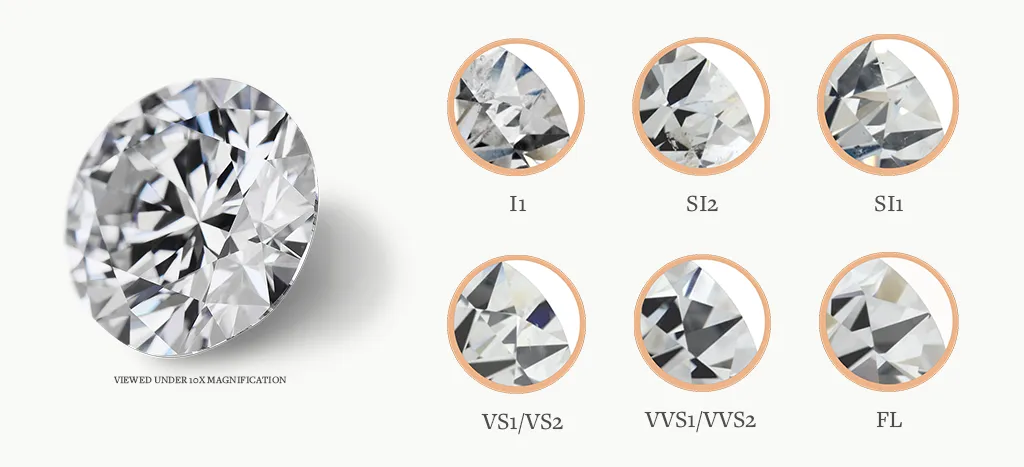
Now an inclusion can be one of several issues found in natural diamonds. It could be seen as a Cloud, Graining, Cavity, or a Feather. Let us explain just what those are.
CLOUD:
A cloud is actually a small group of inclusions in near proximity to each other. This cluster can impact the visual appearance of the diamond and can create a “hazy” or “cloudy” look to it.
GRAINING:
This inclusion can create a sense of graining or reflective lines deep in the diamond and can also create that “cloudy” appearance.
CAVITY:
As it sounds, this inclusion can be found inside the diamond, and can change depending on the types of minerals around during the diamond making process. If those cavities hold colored crystal inclusions the diamond can appear “imperfect” and can be seen by the naked eye.
FEATHER:
This refers to a crack that can be observed in a diamond based on the angle of viewing. Depending on the size and location is can appear to be transparent or have a white hue to it.
CLOUD:
A cloud is actually a small group of inclusions in near proximity to each other. This cluster can impact the visual appearance of the diamond and can create a “hazy” or “cloudy” look to it.
GRAINING:
This inclusion can create a sense of graining or reflective lines deep in the diamond and can also create that “cloudy” appearance.
CAVITY:
As it sounds, this inclusion can be found inside the diamond, and can change depending on the types of minerals around during the diamond making process. If those cavities hold colored crystal inclusions the diamond can appear “imperfect” and can be seen by the naked eye.
FEATHER:
This refers to a crack that can be observed in a diamond based on the angle of viewing. Depending on the size and location is can appear to be transparent or have a white hue to it.
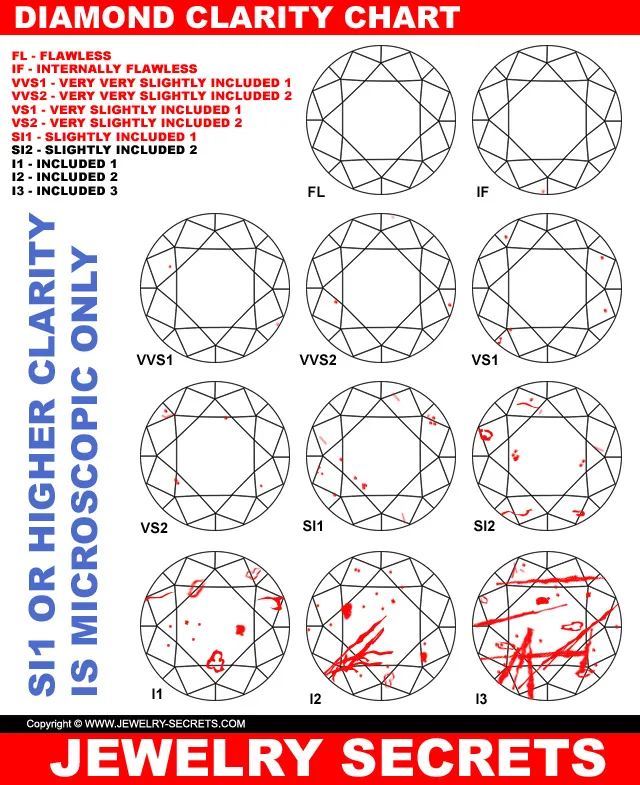
We could go on and on for pages about the clarity spectrum of diamonds, but we hope this covers the basics & helps give you a better understanding of what goes into the grading of a diamond before it is placed in our showroom, or any showroom around the world.
Join us next week as we tackle the color spectrum of a diamond and that grading scale.