
“Be like a diamond, precious and rare, not like a stone that is found everywhere.” -Unknown
Welcome back to our month of Diamond Education blog series where every week we deep dive into the world of diamond education, and what exactly goes into the 4 C’s of a diamonds grade.
Last week we discussed the clarity grading scale of a diamond, and today we are continuing on with the color scale used to decide just how colorful, or colorless, a diamond turns out to be. We should begin by explaining what colors diamonds can come in, and how they are graded

Believe it or not, diamonds can come in a vast range of colors ranging anywhere from blue to pink, and even to yellow. Diamonds are graded on a scale based on their color like many other aspects of a diamond that we’ve talked about previously.
This grading scale begins with a D ranking which means that the diamond is “colorless” and has no trace of any color tint inside. Colorless diamonds are often the rarest and the most expensive diamonds on the market.
As you travel down the scale the letters continue down from D all the way to Z rating the amount of tint found inside the diamond. As you go farther down the scale the more “yellowish” or sometimes “Brownish” tint begins to be more noticeable.
As we discussed a few weeks ago the ability to reflect and refract natural light is important in the value of a diamond. The more color tint in a diamond the less natural light it can reflect, and the lower the price it tends to be.
Below we have a broken-down list of the common diamond color grades given, and what exactly they mean for the everyday customer.
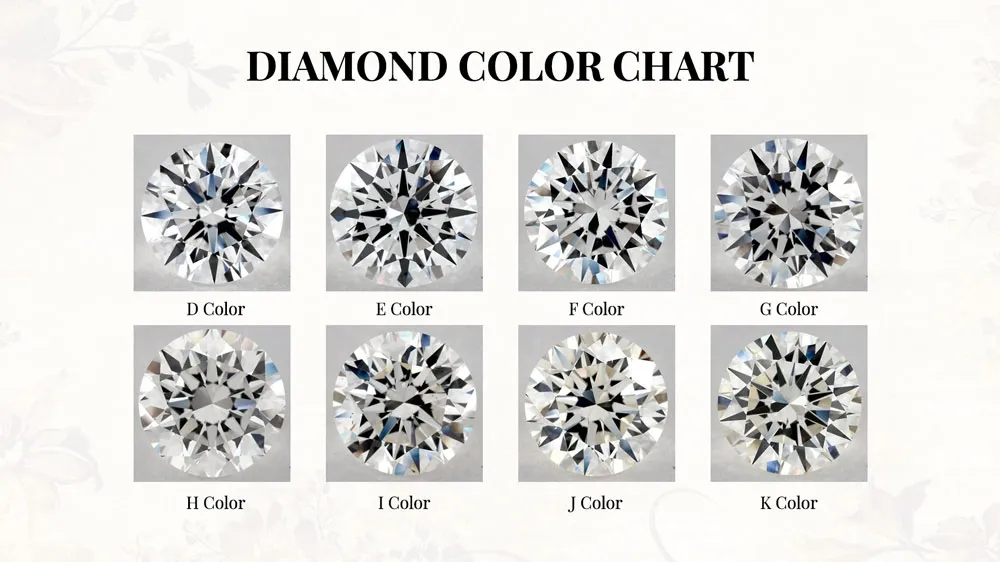
D:
This is the highest grade a diamond can receive, and it means there is no color tint apparent under microscope or to the naked eye. They appear to be fully colorless and are often set in platinum or white gold settings to not distract from the beauty of the diamond itself.
E And F:
Being the second & third highest grades most E & F rated diamonds appear to be very similar to D rated diamonds and the differences usually can only be seen under a microscope. Just like D rated diamonds these are set in neutral tone metals to not take away from the diamond.
G Through J:
This begins the second group of diamond color grades where they are seen as “Near Colorless” with very slight tints of yellow that mostly can only be seen under a microscope by a gemologist. These diamonds are also great set in neutral metals like platinum or white gold.
K Through M:
As we enter the third tier of grading, we begin to see “Feint” tints of yellow in diamonds and these can often be seen even by the naked eye. Even if there is a slight tint to them these are still very good quality diamonds. As we move into this tier most of these diamonds are set in more yellow gold settings to compliment the tint of the diamonds.
N Through R:
Diamonds with an N through R rating have a noticeable “Very Light” yellow or brown tint to them & are often at a much lower price than others rated above it.
S Through Z:
Diamonds with an S through Z rating have a very noticeable “Light” yellow or brown tint to them, and they are often the lowest priced and least desired rated diamonds.
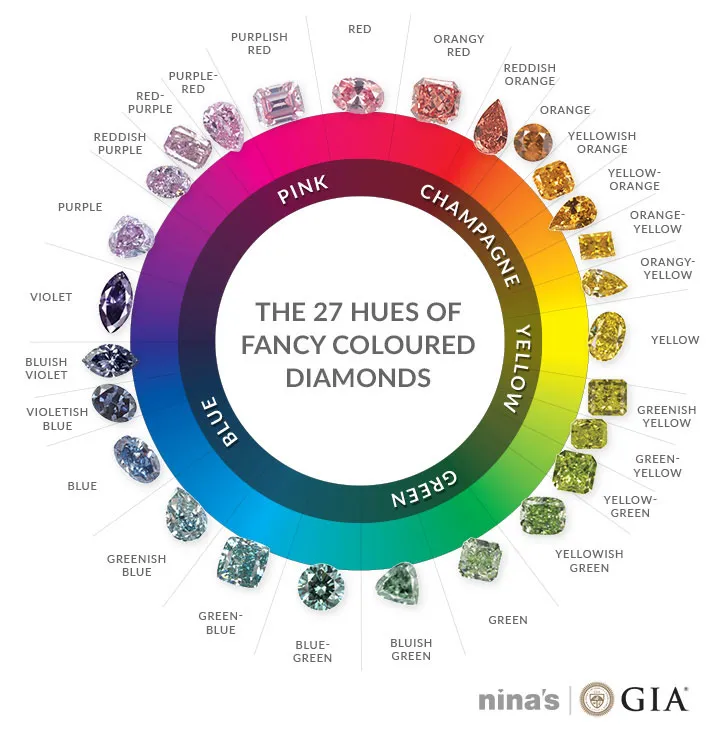
Now everything we have discussed thus far has applied to white diamonds, which are the most desired and sought-after diamonds on the market.
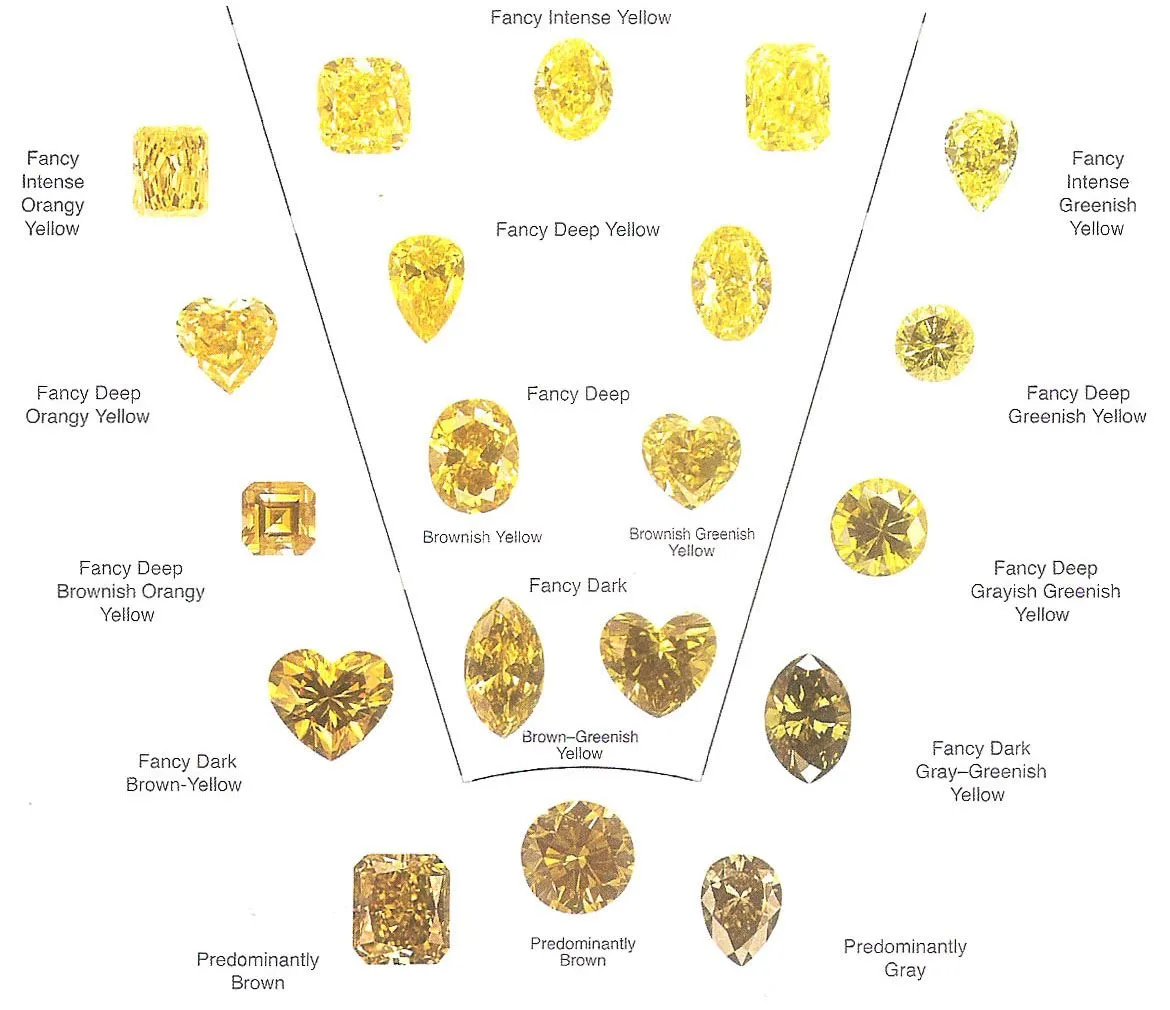
There are actually a wide range of colored diamonds, and those have a completely separate grade scale that is slightly easier to understand. They are the following:
Feint
Very Light
Light
Fancy Light
Fancy
Fancy Intense
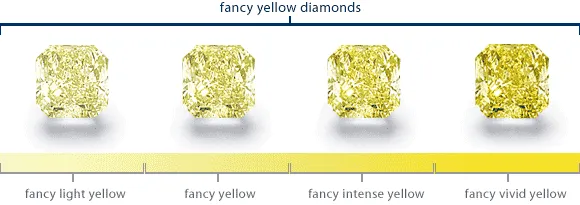
Fancy Vivid, Deep, or Dark
These grading levels begin where a white diamond’s grade would end, meaning, the feint graded color diamond is slightly more yellow then a Z graded white diamond. The farther you go down the grading scale the deeper a diamond’s color gets.
Welcome back to our month of Diamond Education blog series where every week we deep dive into the world of diamond education, and what exactly goes into the 4 C’s of a diamonds grade.
Last week we discussed the clarity grading scale of a diamond, and today we are continuing on with the color scale used to decide just how colorful, or colorless, a diamond turns out to be. We should begin by explaining what colors diamonds can come in, and how they are graded
Believe it or not, diamonds can come in a vast range of colors ranging anywhere from blue to pink, and even to yellow. Diamonds are graded on a scale based on their color like many other aspects of a diamond that we’ve talked about previously.
This grading scale begins with a D ranking which means that the diamond is “colorless” and has no trace of any color tint inside. Colorless diamonds are often the rarest and the most expensive diamonds on the market.
As you travel down the scale the letters continue down from D all the way to Z rating the amount of tint found inside the diamond. As you go farther down the scale the more “yellowish” or sometimes “Brownish” tint begins to be more noticeable.
As we discussed a few weeks ago the ability to reflect and refract natural light is important in the value of a diamond. The more color tint in a diamond the less natural light it can reflect, and the lower the price it tends to be.
Below we have a broken-down list of the common diamond color grades given, and what exactly they mean for the everyday customer.
D:
This is the highest grade a diamond can receive, and it means there is no color tint apparent under microscope or to the naked eye. They appear to be fully colorless and are often set in platinum or white gold settings to not distract from the beauty of the diamond itself.
E And F:
Being the second & third highest grades most E & F rated diamonds appear to be very similar to D rated diamonds and the differences usually can only be seen under a microscope. Just like D rated diamonds these are set in neutral tone metals to not take away from the diamond.
G Through J:
This begins the second group of diamond color grades where they are seen as “Near Colorless” with very slight tints of yellow that mostly can only be seen under a microscope by a gemologist. These diamonds are also great set in neutral metals like platinum or white gold.
K Through M:
As we enter the third tier of grading, we begin to see “Feint” tints of yellow in diamonds and these can often be seen even by the naked eye. Even if there is a slight tint to them these are still very good quality diamonds. As we move into this tier most of these diamonds are set in more yellow gold settings to compliment the tint of the diamonds.
N Through R:
Diamonds with an N through R rating have a noticeable “Very Light” yellow or brown tint to them & are often at a much lower price than others rated above it.
S Through Z:
Diamonds with an S through Z rating have a very noticeable “Light” yellow or brown tint to them, and they are often the lowest priced and least desired rated diamonds.
Now everything we have discussed thus far has applied to white diamonds, which are the most desired and sought-after diamonds on the market.
There are actually a wide range of colored diamonds, and those have a completely separate grade scale that is slightly easier to understand. They are the following:
Feint
Very Light
Light
Fancy Light
Fancy
Fancy Intense
Fancy Vivid, Deep, or Dark
These grading levels begin where a white diamond’s grade would end, meaning, the feint graded color diamond is slightly more yellow then a Z graded white diamond. The farther you go down the grading scale the deeper a diamond’s color gets.
Now the question for many will be, “what color diamond is best to purchase?” and the answer for many differs on what exactly you are looking for, and in what setting you want said diamond.
As we stated above, if you’re looking for a platinum or white gold setting then a diamond rated around H would be near colorless to the naked eye, and for most that will be more affordable than a D rated diamond.
If you’re looking for a more yellow gold setting than we recommend a more K rated diamond that will complement the ring setting very well with its slight yellow tint.
We hope this helps in explaining the world of diamond colors, and their respective grades. Join us back here next week for our final entry in our Diamond Education series where we are going in depth into a diamond’s carat weight!